Will Vibe Coding Lead to Job Losses for Programmers? Embracing Product Thinking
As AI programming tools become more practical, traditional coding methods are being completely restructured. This article discusses the technology revolution known as “vibe coding” and how developers can avoid obsolescence in this transformation.
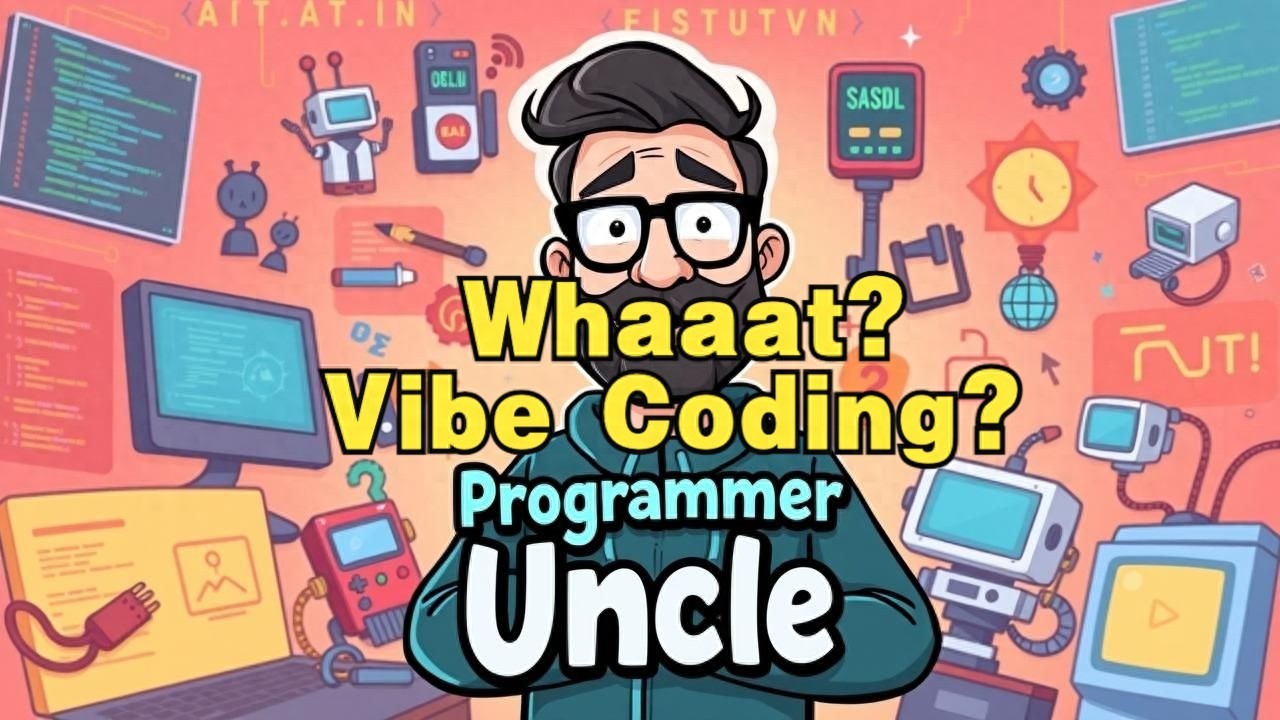
1. Efficiency Revolution and Employment Impact: How Vibe Coding Reshapes Developer Value
Have you recently experienced tools like Cursor predicting your next lines of code, or GitHub Copilot generating runnable code frameworks from functional descriptions? This is not science fiction; it’s the reality we are facing.
Vibe coding, in simple terms, is a development model that allows AI or low-code platforms to generate code through natural language commands, intuitive interactions, or high-level abstractions. The core technologies behind it are large language models and program synthesis techniques, which are boosting development efficiency by several times.
For example, implementing a user login feature used to require hundreds of lines of code, including front-end validation, back-end interfaces, and database operations. Now, you can simply describe the requirements in natural language, and AI tools can automatically generate a complete code framework, requiring developers only to make minor adjustments and optimizations.
This leap in efficiency directly leads to a polarized job market. The demand for junior coding positions and implementation engineers is rapidly declining. Developers who only write repetitive, modular code find themselves in an unprecedentedly vulnerable position.
Conversely, the market’s demand for high-value talent—those who can accurately define problems, design system architectures, and control product direction—is surging. The core value of future developers will no longer depend on the quantity of code output but rather on business insight, problem abstraction ability, and decision-making quality. Coding implementation skills will gradually evolve into a basic competency rather than a decisive advantage.
2. Transforming to Survive: The Path from Code Implementer to Product Builder
In light of these trends, how should developers respond? The answer is clear: they must cultivate product thinking. This is a core human capability that AI cannot easily replace and serves as a bridge between technical skills and business value.
What exactly is product thinking? It encompasses user empathy, market analysis skills, data-driven decision-making, understanding business models, and prioritization judgments. These abilities enable developers to become key players in product decision-making rather than mere executors.
Developers can enhance their product thinking through several approaches:
- Skill Augmentation: Proactively learn user research, UI/UX design basics, data analysis, and project management knowledge. These are not just for product managers; future excellent developers must understand them.
- Role Practice: Actively take on the role of a “mini product manager” in the workplace, participating in requirement discussions, challenging unreasonable demands, and proposing technology-based product optimization solutions. For instance, when a product manager suggests a feature, think about whether it truly solves user problems and if there are better solutions.
- Tool Collaboration: Learn to use vibe coding tools efficiently, viewing them as powerful “co-pilots” to free up mental energy for higher-level thinking. For example, use Cursor for repetitive coding while focusing on architecture design and business logic.
Most importantly, a mindset shift is essential. Transition from being a “task executor” to a “product owner,” taking responsibility for the product’s ultimate success.
3. Opportunities and Challenges in the Era of “Everyone is a Product Manager”
Vibe coding brings not only challenges but also significant opportunities. The lowering of development barriers means innovation democratization, allowing more entrepreneurs and domain experts without technical backgrounds to rapidly prototype or even productize their ideas.
Imagine a medical expert with a brilliant idea for medical software; they no longer need to find a technical team to develop it from scratch. They can simply describe their requirements in natural language, and AI tools will generate a basic version. This will greatly stimulate innovative energy and foster a more vibrant product ecosystem.
However, this democratization of innovation also poses potential risks. Lack of deep technical foundations in product building may lead to inherent flaws in software architecture, security, maintainability, and performance. This highlights the critical role of the “new era developer” who possesses both product thinking and technical depth—they will become the gatekeepers of quality and architects of complex systems.
The career paths of top developers in the future will be more diverse. You could become a product manager with deep technical control, making more informed product decisions; a tech-savvy entrepreneur quickly bringing ideas to fruition; or an expert focused on solving extremely complex technical issues.
The key is to find the intersection of technology and business. Regardless of the path chosen, product thinking is an indispensable core competency.
4. Conclusion: Be a Wave Maker, Not a Drifter
Vibe coding is not the end of programmers but a significant liberation and repositioning of their value. It is not programmers who are being eliminated, but those unwilling to evolve and unable to create excess value.
What the era discards is not people, but outdated mindsets. Whether one adapts or not will determine if they become beneficiaries or victims of this storm.
Looking ahead, we will witness a more efficient and innovative tech ecosystem led by “product-oriented developers”. These developers not only understand technology but also business, users, and markets. They can create genuine business value with technology, not just implement functions.
For developers, mastering vibe coding tools is akin to gaining superpowers. But the true superpower lies not in the tools themselves, but in how to use these tools to solve real problems and create user value.
Comments
Discussion is powered by Giscus (GitHub Discussions). Add
repo,repoID,category, andcategoryIDunder[params.comments.giscus]inhugo.tomlusing the values from the Giscus setup tool.